Monday, December 19, 2011

The Role of Protest: How do we convert energy to power?


http://www.echoinggreen.org/fellows/van-jones


Toward the end of the semester I sat in Wheeler Auditorium, watching and listening to Van Jones speaking to the Edible Education class via webcast from Burbank. This was the third time I had heard Van Jones speak, and like the other two times, he planted seeds of new ideas in my mind.


Jones spoke about Occupy, about protesting income inequality, about how our crises are interrelated and how getting out there and making our voices heard is essential in this pivotal historical moment. He spoke about the American dream, about reinventing society and forever moving in the direction of universal justice.

But one comment stuck out in particular. "Protesting creates a lot of energy. We've got to start translating that energy  into power. Political power." 


That got me thinking. What's the difference between power and energy, anyway? Didn't I learn this in high school physics?


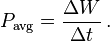
(taken from Wikipedia) 
P_\mathrm{avg} = \frac{\Delta W}{\Delta t}\,.
So average power is the average amount of work or energy converted per unit of time. And work is force multiplied by distance.

What does this have to do with protest, movements, revolutions? A lot, actually. As Van Jones pointed out, the Occupy Movement has generated a lot of energy. I witnessed this energy firsthand at Occupy Cal, where thousands of students gathered on Sproul, marched through the city of Berkeley, held general assemblies, and valiantly linked arms to protect their space. There was dancing, and drumming, and gospel, and speeches straight from the heart. Lots of bodies, lots of ideas, lots of anger, lots of passion ---- energy. 


One of my personal photos of Occupy Cal, 11/15/11
But ultimately, that energy will not mean anything unless it becomes power. And power has to do with conversion and time. As the Occupy camps hold their ground and time keeps ticking away, people have begun to wonder - are these camps really about protest, or are they just new places for people without homes to live? Has the momentum died down? These questions are valid. It's hard to see how the encampments will really accomplish political or economic change.

There has actually been a fair amount of "work" done. As the New York Times has pointed out, the words "income inequality" have entered the collective consciousness of the United States. We are beginning to redefine public space. Occupy Cal and other student Occupy's have begun to expose flawed power relationships in the higher education system (yes, I'm looking at you, Chancellor Birgeneau.) But in order to keep generating power, rather than collecting a mass of energy, we've got to keep doing work.

The Keystone XL protest movement has done a really great job of exercising this principle. Bill McKibben and other Tar Sands Action activists have harnessed the energy of angry and passionate environmentalists, orchestrating the largest act of civil disobedience in years. They got arrested in August, they encircled the White House in November. They caused Obama to delay the approval of the pipeline, and over the past few days have been flooding the White House phone line with calls urging Obama to resist Congress' pressure to expedite the pipeline approval process. All this has happened in a matter of months - energy converted, over time.


I understand why people get frustrated with protesting. A lot of the time, it doesn't accomplish much, and more just serves as an outlet for anger and resentment - with excess yelling and banging of pots and pans. But when protesting is part of a larger movement, that is doing work, converting energy, and utilizing time effectively, it can be an absolutely essential tool for social change.

How's that for a physics lesson?

Saturday, November 26, 2011

Thankful

In honor of the holiday, I thought it would be a good idea to come up with a list of everything I'm thankful for as an environmentalist, sustainability activist, and nature lover. It's pretty easy to get negative when working on the never-ending issues that plague our planet and our culture, so I'm going to step back and look at all the wonderful things to appreciate.

I am thankful for...

the victory over the Keystone XL Pipeline in November 2011 (even if it is temporary)

the fact that renewable energy is growing every single year, and that the green economy is one of the only sectors of the economy experiencing remarkable growth

incredible people, and organizations, who are working around the clock doing incredible things. [350.org, Bill McKibben, the CSSC, Van Jones, Solar Mosaic, Focus the Nation, Alice Waters, the Sierra Club, the Energy Action Coalition, just to name a few]

the rising of a new, energetic, and powerful movement - Occupy, and the interconnectedness and solidarity that Occupy has created among disparate movements


climate scientists who are both finding extensive data and fighting to have their scientific opinion honored and respected (like James Hansen!)

the redwood grove in the Berkeley hills, and for that matter, redwoods everywhere. they take in carbon, they give us oxygen, and they give me beauty, wonder, and spiritual peace

the fact that fracking for natural gas in Delaware has been postponed

youth activists all over the country who are fighting for our generation and our future

The Green Initiative Fund, which gives out hundreds of thousands of dollars to student projects working to make campuses more sustainable

national parks, state parks, national forests, national monuments, national marine sanctuaries - basically places to play!


UC Berkeley and the incredible opportunities that it offers me in academics and leadership

the ocean (and its coral reefs, and kelp forests, and tidal zones, and deep open waters)

inspiring and passionate professors spreading knowledge, wisdom, and insight, and even showing up at Occupy protests because they truly care

the Endangered Species Act, the Clean Air Act, the Wilderness Act, the Clean Water Act... we live in a country that actually does give a damn, despite what we often think... and we're cleaner than most!

technology and the internet, without which, we could never have the international or even national interconnectedness that we do today in our movements and struggles

organic and sustainable farms, and organic and sustainable farmers

California's new cap and trade legislation

people under the radar everywhere who bike instead of drive, who grow their own food, who live zero-waste lifestyles, who compost, who dumpster dive, who practice permaculture, who put on sweaters instead of turning up the heat

delicious tap water in Berkeley, making bottled water useless (and hopefully gone soon, thanks to Take Back the Tap!)

the natural beauty everywhere I look that motivates me, refreshes me, inspires me every day


Whew, that's 20! Making that list made me feel pretty good, I have to say. What are you thankful for this November?


Friday, November 11, 2011

Keystone XL: A Symbol for the Modern Environmental Movement

Victories in the environmental and climate movement have been hard to come by lately. As the word "climate" has become increasingly more difficult to say in the political discussion, as the EPA struggles to hold onto its power, as fossil fuels continue to reign supreme, it's been hard to see how things are ever going to change at the rapid pace that the climate is changing.

But yesterday, President Obama announced he would delay his decision regarding the Keystone XL Pipeline until after the 2012 election. This decision came just four days after a massive protest in DC, where 12,000 people encircled the White House under the firm belief that if Obama approves the pipeline, there will be devastating consequences for the climate, indigenous peoples, water quality, boreal forests, the renewable energy economy, and more. These heroes encircled the White House more than four times. 


http://takethesquare.net/wp-content/uploads/2011/10/TarSandsAction-9-1-11-Group-2-banner-crop.jpg

Yesterday evening, I attended a timely panel at UC Berkeley hosted by the Berkeley Energy and Resources Collaborative (BERC) and the Environmental Law Society, regarding the pipeline. The panel featured Jamie Henn, of 350.org; Dr. Paul Henshaw, UC Berkeley Professor in Earth and Planetary Sciences; Cassie Doyle, Consul-General of Canada in San Francisco and the Silicon Valley, and Sarah Burt, of Earthjustice.

The hour and a half of discussion brought some really important and pertinent questions to the table. Is the pipeline a better alterative to bringing politically and physically messy oil from overseas via tankers? Is modern pipeline technology safe enough to make this a good idea? What will it do for gas prices? Jobs? Will building this pipeline further inhibit clean energy companies like wind farms and solar firms to break into the market? What would the pipeline say about our national attitude toward climate change? I urge you to explore all of these questions yourself by researching the facts and evaluating your priorities.

While many interesting perspectives were brought up over the course of the discussion, I absolutely stand by original stance - that this pipeline cannot be justified, and should not be built under any circumstances. The tar sands in Alberta make up the third largest oil reserve in the world. As Jamie Henn reminded us, James Hansen (top climate scientist from NASA) has stated that if we were to utilize the oil from that tar sands reserve, it would be essentially game over for the climate. While Dr. Henshaw reminded us that there are new technologies like horizontal and dual-well systems, nothing can overcome the implications for the global climate. Cassie Doyle reminded us that Canada's energy profile is cleaner and more efficient than ours in the United States - and that's precisely the problem. The US has to end its addiction to oil. 


The costs of this pipeline to the environment, climate, and indigenous livelihoods are just too great. And that's why I am so ecstatic about Obama's announcement yesterday - even though it's not a "no," it's a "I acknowledge the opposition and I think you're right - this needs more review." It gives us even more time to prove that the people of the United States do not want this.

So why did this fight win? How did it build so much momentum? Why did this fight come to the forefront of the movement? 

Over the past five years or so, the "environmental" movement has fractured and changed shape. Due to the evolution of climate politics, there are often splits between environmental conservationists and climate activists ("climate hawks.") Wind turbines vs. migratory bird and bat well-being. Hydropower vs. healthy rivers. Nuclear energy and the many facets of that debate.

But this issue, the Keystone XL issue, unites these fronts. Whether you're an environmentalist or a climate hawk, a John Muir preservationist or a Gifford Pinchot utilitarian, you have a place in this movement. The Keystone XL brought together people who care about renewables, people who care about forests, people who care about human rights, people who care about democracy and hate corporations, people who care about the climate, and people who just don't like pipelines. That togetherness was desperately needed in the environmental movement, and I'm so happy to see that it has arrived in full force - 12,000+ strong.

Wednesday, November 9, 2011

We Are Nature: CSSC Fall 2011 Convergence

Social biomimicry. 

Radicles.

Permaculture. 

Ubuntu. 


These are words that stuck with me after the California Student Sustainability Coalition's Fall 2011 Convergence at CSU Chico this past weekend.


Morgoth Gamboa got my adrenaline pumping as he kicked off the weekend with energy, passion, and a way of thinking that was completely new to me. He walked us through the concept of "social biomimicry"how we can model our activism, communities, and social systems using biology and nature. Just as a baby plant takes in resources and energy, stretches its roots downward and outward in order to grow tall, inhales the good and exhales the bad - so can we as sustainability activists.


The California Student Sustainability Coalition is roots. It's interconnected fungi beneath the soil, creating symbiotic relationships between all of the interwoven life in its realm (that's us!). It's sunlight in the form of new perspectives, voices, insight, passion. It's the ecosystem that contains all of us: "radicles," just waiting to break through the surface to grow, grow, grow - and give back.


By this, I mean that the CSSC is a network of sustainability-minded students from across the state of California, providing a space to communicate, collaborate, and help our campus projects and campaigns grow and develop.


We are a permaculture. Or, at least, we strive to be. If we are conscious of ecological principles, and act out of this consciousness, we can transform our planet and our social system so that they last. When we get rid of the concept of "waste," when we live within earth's limits, when we appreciate one another and grow from our interactions, when we comprehend the intrinsic connections between life, matter, and mind- then, we can begin to approach something like "sustainability." Then, we move toward a permanent culture that sustains itself with intrinsic motivation, mutualistic relationships, and the plain-old happiness that comes from being together- happiness I know I felt this past weekend at the convergence.


In my Environmental Studies class last year, we spent a little time studying wilderness philosophy. Wallace Stegner's Wilderness Letter stuck in my mind ever since... particularly one quote:


"We simply need that wild country available to us, even if we never do more than drive to its edge and look in. For it can be a means of reassuring ourselves of our sanity as creatures, a part of the geography of hope." (read the full letter here)


That quote always spoke to me, but it has taken on new meaning now. "Wild country," or wilderness that exists on its own terms, allowed to grow and thrive as biology mandates, is our classroom. It's "a means of reassuring ourselves of our sanity as creatures" because the relationships, complex systems, and intrinsic beauty within that culture of wilderness are what we need to study in order to model our communities and restore and sustain "sanity." Then, we can begin to create a "geography of hope" - rooted in a sense of place, we can grow and transform into the kind of culture and the kind of planet we've always dreamt could exist. When I look at where all the convergence attendees came from on the map of California, I see a geography of hope.


I can close my eyes and imagine the CSSC Convergence, with all its elements, from workshops to late night jam sessions to a field full of wet tents, as a garden. Each part plays a role, everyone occupies a niche, every nutrient is used and recycled, and the result is something beautiful. And for that matter, sustainable - because we'll all be back in the spring, and the fall after that, and the spring after that! 


As in a lichen, where the algae exists because the fungus exists, as in a forest, where one live oak exists because another one does, I exist because you, you beautiful sustainabilibuddy, exist: Ubuntu. 


Friday, October 28, 2011

Occupy The Ground You Stand On

It's pretty mind-blowing that in the course of a few months, a word can take on an entire new meaning. Back in the summer, "occupy" was just another average word in the English language. 
occupy

oc·cu·py

verb, -pied, -py·ing.

verb (used with object)
1.
to take or fill up (space, time, etc.): I occupied my evenings reading novels.
2.
to engage or employ the mind, energy, or attention of:Occupy the children with a game while I prepare dinner.
3.
to be a resident or tenant of; dwell in: We occupied the same house for 20 years.
4.
to take possession and control of (a place), as by military invasion.
5.     to hold (a position, office, etc.). 


The movement began on September 17th, 2011, in New York City. Now, as the Washington Post recently stated, 

"...the Wall Street occupation has become a national phenomenon. The president is interested, celebrities are popping by, and pizza shops are adding the OccuPie to their menus...The movement has spawned hundreds of Occupy locales in a national Occupy Together network. And now there is talk of going global: Occupy the World" (http://www.washingtonpost.com/national/on-leadership/what-is-occupy-wall-street-the-history-of-leaderless-movements/2011/10/10/gIQAwkFjaL_story.html)


Now that is what I call momentum. The environmental movement, particularly Bill McKibben and the Tar Sands Action activists, stands in solidarity with Occupy. Now the protesters on the UC Berkeley campus who organize the days of action for public education are framing the effort as "Occupy Cal.

So why has this simple, average word latched on to the public consciousness with such tenacity and force? Look at the dictionary definition, and the answer is pretty clear. Who doesn't feel passionate about taking up or filling up space, or engaging the attention of someone else, or dwelling in one's community, or taking possession of rights, of livelihood, of freedom. Every "little guy" deserves a power trip once in a while. 

Yes, this is about empowerment Empowerment to the individual, to the family, to the community. It's about occupying the ground that you stand on- filling up space, seizing control of your own life and your own power, planting roots in your community but growing up toward the sky in limitless potential. We all tend to feel like just a number sometimes, belittled by gigantic corporations, gigantic government, gigantic world population, gigantic global problems. But here is a reminder that we all occupy physical space, we all dwell in our communities, and we all occasionally have the power to engage the attention of the world. 

And you know what? That last paragraph is a lot of what I would say about sustainability. Sustainability is all about community, giving power to the people, localizing our lifestyles, and creating a resilient society that occupies firm ground with strong roots - without sacrificing the future. 

That's why Solar Mosaic is "Occupying Rooftops" with solar panels on Community Solar Day - November 20th, 2011. By occupying rooftops and transitioning to clean, localized energy, we are occupying our communities and empowering the people, the 99%,  to seize control. I love how this single, average word is starting to unify social movements that have historically been so frustratingly disparate. Word. 

You don't have to join the rhetoric, you don't have to use the jargon, you don't have to "stand with the 99%" to occupy space in this world. Own your personal niche in the world; occupy the ground you stand on. 


Saturday, October 15, 2011

Quotes from Edible Education 101

I've had seven lectures of Edible Education 101 already, with a diverse array of speakers on topics ranging from the agricultural movement in Italy, to food equity among races, to nutrition and the evils of sugar. I'm learning so much and it's making every bite I take, and every decision about what bite I take, much more conscious. I've stopped drinking soda all together and I bring my own lunch to campus most of the time now... and more changes are coming I'm sure. Here are some of my favorite quotes from the various speakers Michael Pollan has brought in for us:


My Moving Planet Speech


I wrote this speech on the eve of Moving Planet in bed, and inside Anne's Kitchen over chocolate-chip pancakes on the morning of the big day. Somehow I mustered up a little bit of courage and delivered these words to the twenty or so students who showed up to the Sproul Steps before heading to the San Francisco event. 

Sunday, September 25, 2011

Moving Planet

Yesterday, September 24th, people in 175 countries came together to move the planet past fossil fuels as part of 350.org 's Moving Planet day. San Francisco had one of the biggest events, consisting of a march down Market Street and a rally at Civic Center Plaza with Bill McKibben and Michael Brune. Thousands of us filled the streets and I was empowered by the passion, energy, and defiance that went into each step of each marcher.


To really get a sense of what Moving Planet and 350.org are all about, you've got to check out the absolutely awe-inspiring slideshow of photos at Http://moving-planet.org The internet has brought us to an age where there can be something called a "global rally" or a "worldwide mobilization" - we can see what's happening in Cairo, or the Maldives, and we can see that we are not alone - we are pretty damn powerful, in fact.
Bill McKibben, director of 350.org

Not So Much of a Demon After All - Guest Post by Aaron Jacobson


Sijmon de Waal/Marine Photobank.
The interaction of humans and sharks began only a short time ago, from a shark’s perspective. Sharks evolved somewhere around 400 million years ago and have been thriving on Earth ever since. In their most recent chapter of history they have encountered a new competitor, humans, who have quickly developed as a formidable foe and efficient predator. The populations of nearly every known species of shark have declined heavily in the last few decades and are still decreasing. The fate of sharks depends on our ability to turn this predator/prey relationship into a co-existing relationship that will maintain the integrity of the ocean ecosystem.

Sunday, September 11, 2011

Positive Patriotism

Today, on the 10th anniversary of the 9/11 terrorist attacks, people all over the world are looking back, remembering, reflecting. September 11th brought us a solidarity as a nation that we seem to have lost sight of completely, at least in the political world. We were brought together on that fateful day because we were reminded of what we have in common, rather than what breaks us apart. I was only in the fourth grade, and I think that was the first time that I felt like an American - I watched the news; I stuck an American flag sticker onto my school binder,  proud of its symbolism. I listened to Enrique Iglesias' "Hero" over and over again.

Patriotism is a powerful force - for better or for worse. When friends  or family complain about the flaws of this country, I always comment that I do truly love the United States of America. If I didn't, why would I fight so hard to make it better? I love living in a country that boasts some of the most beautiful natural wildernesses on the planet. I love exploring and discovering the incredibly diverse array of people, cultures, traditions, neighborhoods, landscapes, languages. I stand by the core ideals upon which the country was built, although sometimes the way they are interpreted frustrates me.

So how can we find and cultivate positive patriotism without waiting for another attack to shock us into solidarity? I think patriotism and the sustainability movement have a lot they can learn from one another. Think of how patriotic we would feel if we declared energy independence, if our bodies were nourished by locally grown food. I, for one, would find it much easier to stand by my country if we as Americans started to account for our actions and worked to ease the climate change caused largely by ourselves.

Instead of waiting for another disaster, be it terrorism, fires, flooding, or economic collapse, let's get to work because we love our country. Rather than erect memorials and find ourselves stuck in the past, let's create a stronger, more resilient, more sustainable, more beautiful country that in itself is a memorial to the lives lost on 9/11.

Unlimited

Wow, what a week. My life here in Berkeley is quickly becoming a whirlwind of environmental activism, incredible and thought provoking classes, and mind-bending conversations. As I have begun working on the 350 campaign, I have gotten the opportunity to meet some really awesome global organizers. I am developing my own leadership skills as Earth Week co-coordinator and Focus the Nation coordinator under the Sustainability Team umbrella. I'm taking a big seminar-style class called "Edible Education: The Future of the Food Movement," facilitated/organized by Michael Pollan (!!!) and Nikki Henderson (!), and so far we have been fortunate enough to hear two incredible speakers: Carlo Petrini and Peter Sellars. Additionally, I was offered a research position in a forestry lab which looks at correlations between above ground and below ground biomass in redwoods and aspen. Last, I got to hear Bill McKibben's free talk at Berkeley the other night, and then hung out with him at a brewery in Oakland with the 350 team. I really, really love the Bay Area.
 
Now, after spending freshman year just kind of getting a feel for what everything's like out here (and hiking - A LOT), I now feel like I am delving into the very activities, classes, ideas, and passions that will define me at least during my college years if not beyond. So you can't blame me for being a little bit confused, a little bit lost, a little bit overwhelmed. There are literally unlimited options, unlimited causes, unlimited ways to act, unlimited ways to be an activist.

Monday, August 29, 2011

A Week to Recharge!

I just returned from a week on Mount Hood with 20 college students from around the country, participating in a "clean energy retreat" called "Recharge!" The event was put on by the Portland-based organization, and was facilitated by two wonderful leaders from the Center for Whole Communities. Rather than try to capture the week in a logical, journalistic format, I'd rather just disclose some snapshots and lessons learned from a week that changed my life.

Robin Cody, a storyteller who mesmerized us all with his powerful words, began his stories with "Back when mountains were people..." and explained geology and natural wonders with beautiful myth. Robin engaged my senses, from the view of Mount Jefferson, to his soothing voice, to the taste of the sour-sweet huckleberries in my mouth and the smell of the forest. Senses have power. Senses are stirring.


After touring a hydro plant, a wind farm, and a coal plant, I felt changed. Energy took on new meaning now that it was tangible. Now that I had touched a wind turbine while feeling real wind on my face, energy was suddenly very real. Now that I felt the heat from the burning coal, energy became real. Tangibility. Senses have power. Senses are stirring.

Enrique, a facilitator... speak from the heart, from the "I." Speak of dreams and of vision. Speak from the base metaphor.

We all belong to one of four quadrants- innovators, storytellers, technicians, politicos. I am a storyteller. What happens when the four quadrants come together to collaborate? Four strands forming one braid. A pyramid sitting on a solid base, pointing toward one goal. Interdependency. Interconnectedness.

Having a sense of humor - that is important. We laughed through skits, we laughed around the fire, we laughed during awkward silences. We sang songs, we made fun of each other. Roby Roberts, a speaker from the wind industry, reiterated this point. Even as he spoke of disappointments and setbacks, he put a positive and funny spin on things. It helps. We need funny.

"Don't let your education define you. It's a tool, but not your whole toolbox." - Nick Scott

What is the story of now? We have to be shameless and fearless to put out our public narrative which will inspire people to act. Urgency demands us to sometimes drop everything, while maintaining a sense of identity and morals throughout. I need to demonstrate what I am for, not what I am against. Movements are like tidal waves and often can't be stopped.

On the hike up Mount Hood, I witnessed a receding glacier. Once again, senses and the physical world filled me up to the brim. It is one thing to hear about the effects of climate change, and a whole completely different thing to see it, to feel it, to experience it. And yet, at the top of the ridge, conversations of hope. Of solutions. Personal reflection. Collaborative reflection. Mountains all around and snow in August. The natural world inspires in a way that no human being can.


Allison Gannett walks the talk. She is idealistic - a professional skier and climate change activist. She is pragmatic - a carbon footprint fanatic. She is technologically savvy - a straw bale house designer and a farmer. She comes from all four quadrants, and so she has a grasp on the world - its problems and its solutions.

Walking over "roadblocks" on a team brainstorming session through the woods. The act of physically stepping over logs and moving to new spaces really did help my group come up with some ideas about how to work together toward solutions. "Grasp" was born - the Craig's List for environmentalists and problem solvers.

I returned to my Berkeley community, energized, stronger, more connected, more powerful. Recharged. Ready to Focus the Nation.

Sunday, July 24, 2011

Wonder


This morning, my brothers and I toured through the National Aquarium in Baltimore, amongst hoards and hoards of people. I was brought there by nostalgia, and left feeling a little bit underwhelmed. It was the first time I had been in probably five years. In those five years, I have learned to scuba dive, and have explored the incredible ocean firsthand, from the Great Barrier Reef to the Galapagos to Honduras.

"It's sad that this is how most people see the ocean," said Aaron. I replied, "Yeah, but it's better than nothing." Moments later, a four or five-year-old ran toward a tank with some fish, yelling "Mira los peces! Mira los peces!" ("Look at the fish!")

While the tanks pale in comparison to the real, vast, abundant ocean, Aaron and I reminded ourselves that we fell in love with the ocean way before we learned to snorkel or dive. In fact, the National Aquarium first introduced each of us to our first favorite marine creatures: mine, the dolphin, and Aaron's, the sea turtle. For a long stretch of my childhood, I was obsessed with dolphins, and was convinced that I would either become a dolphin trainer or a marine biologist. That sense of wonder and love toward the marine world has brought Aaron a Marine Affairs major and interest in fisheries management, and myself a passion for environmentalism.

Monterey Aquarium

Wonder. It's the spark we all need, that slowly develops into passion. Passion that we need to start following more often than ignoring. Children view the earth with wonder; we just need to remind ourselves not to numb ourselves to it as we age. Because that wonder inevitably turns into a desire to care for the earth. Once we can stare with amazement at the spectacular work of geologic forces or evolution, we gain respect and love. Once we realize, awestruck, how flawlessly nature functions, we gain respect and love. Once we respect the earth, we let it govern us, rather than the other way around. And then, thousands upon thousands of problems will be solved.

That's why, when I hear about legislation aiming to develop America's wildernesses and close state parks in the name of "economic necessity," I'm a bit taken aback. Because fostering wonder might in fact be one of the very best things we can do for our country - and that includes the economy. Because we can only improve a country that we actually love.

Wednesday, July 20, 2011

The Thermometer is Rising


I'm just curious, on this scorching hot day in the District of Columbia, when Americans will start making more than just observations. Seriously. Look at this freaking weather map. Personally, I'd rather not wait for it to get hotter and hotter before we stop burning all that oil and coal. But I guess other Americans are fine with living in a sauna? Hm.

P.S. Gotta love my northwest :) Just hope climate change doesn't cause a huge migration over there! Oregon and Washington better not be crowded by the time I want to live there...

Sunday, July 17, 2011

The Harry Potter Generation

Thursday night, I joined the hoards of young(ish) people in the momentous midnight showing of the Harry Potter finale. We all grew up with Harry Potter, and now Daniel Radcliffe is older, as are we. Many people are calling us the "Harry Potter Generation." There were more than a couple of people shedding tears as the final movie came to a close the other night. Facebook statuses about "ended childhoods" filled up my newsfeed.


So what? Why am I posting this on this blog? What does this have to do with the Lime Revolution?
Well, because I think Harry Potter makes an excellent hero. An entire generation of people look up to him. Now we, the Harry Potter generation,  have to start acting like him.

Harry knew, deep down, what was right, and what he had to do. And he did it. There was never a question- should I try to find the last horcrux? Should I meet Voldemort in the Forbidden Forest? He knew, in the most solid, concrete form of knowing.

We are the Harry Potter Generation, and we are also the generation with the world on our shoulders. I know, deep down, that I will have to fight for the rest of my life for what I know is the right thing - preserving the earth for all its life. Clean energy. Wilderness preservation. Sustainable farming and fishing. Efficiency. Smart transportation. Responsible water use. Endangered species conservation. These things are the right direction. I think we all know they are right.

Sometimes we don't know exactly how to get there or how it's going to turn out. But did Harry always know exactly where he was going, or what he was going to have to face? No, but he went anyway. He got it done, because he knew it had to be done.

In a political climate where there's a lot of doubt, and splits, and biases, and compromises, and corruption, and maybe even some dirty interests, let's try and stay true to what we know is right. Let's never lose sight of the Harry Potter moral compass that JK Rowling entrusted with our generation. We might be hunting horcruxes for a little longer than Harry did, but if we stay true and fight to the end, I'm sure we'll get there.

Tuesday, June 7, 2011

In My Lifetime

I haven't lived for very long yet. 19 years is not a long time, particularly on a planetary scale. But in my lifetime, I have already seen massive and destructive changes in the earth's climate. And that's a little scary to me. 


In my lifetime, I have seen a change that maybe other people haven't noticed yet. But five or six years ago, people were talking about the possibility of global climate change, if we continue on our current path. Climate change was a possibility. But we didn't change our behavior. Actually, we did change our behavior- we used even more fossil fuels. We consumed more. We ignored the "inconvenient truth." 


Now, the rhetoric talks more about avoiding the "worst effects of climate change," "irreversible climate change," "catastrophic climate change." That subtle change in language means something. It means that climate change has arrived. 


This year the world has had to suffer through more destructive weather events than anyone can remember from any other year. Joe Romm posted today an article in Climate Progress : http://thinkprogress.org/romm/2011/06/07/239084/wildfires-floods-masters/


Quoted in his article are scientists:


Dr. Jeff Masters, Meteorologist: "We have never seen a year like this before." 


Katharine Hayhoe, Climate scientist: "We’re also seeing shifts in our weather patterns and circulation patterns. So, some places that are already quite dry are getting dryer. Other places that are already quite wet are getting wetter."


It is already happening... we're starting to see shards of the dark future people began predicting decades ago. I just wonder how bad it's going to get before people realize that a real overhaul is in order. Will it be when refugees need to find a home in your country? What about when a friend's farm goes under because of droughts? How about the disappearance of a species from your favorite hiking spot? 


Do we really have to wait for it to get even further? Where is our foresight? For that matter, where is our hindsight? 

Tuesday, May 31, 2011

Why 350 is my Favorite

I've posted before about events organized by the organization 350.org, led by the inspiring, energetic, impressive Bill McKibben.  The name "350" comes from the amount of carbon dioxide that climate scientists say we should stabilize at in order to avoid the full effects of catastrophic climate change - 350 parts per million. I have to say, 350 is probably my favorite environmental organization that's out there right now.

350.org is so much more than a number. It is bringing people together from ALL over the world, bringing tons of organizations together, to create a global climate movement. The 350 team builds from climate science, and then acts from there. Social movement style. They rock the boat, without losing any sanity. Their days of action have been beautiful, grassroots, powerful, inclusive... and they don't stop.

On September 24th, 2011, 350 is launching Moving Planet- their next day of action. Moving Planet is about getting people to the streets to "move" past fossil fuels- on bikes, roller blades, foot, kayak, etc. I love 350 because they are always in motion. Bill McKibben and his team know that the only way we're going to have our voices heard, the only way we're going to get the government and corporations to start taking responsibility, is to demand it in a full on MOVEMENT.

In encourage everyone to take a look at 350.org and get involved with what they are cooking up. I know I'll be on the streets on September 24th, hopefully alongside friends and fellow Berkeley students. I also hope to help organize events so that the day is the biggest and best climate action rally to date.

We will move ourselves, to move others, to move others, and eventually, we will move this planet.