 |
| http://www.echoinggreen.org/fellows/van-jones |
Toward the end of the semester I sat in Wheeler Auditorium, watching and listening to Van Jones speaking to the Edible Education class via webcast from Burbank. This was the third time I had heard Van Jones speak, and like the other two times, he planted seeds of new ideas in my mind.
Jones spoke about Occupy, about protesting income inequality, about how our crises are interrelated and how getting out there and making our voices heard is essential in this pivotal historical moment. He spoke about the American dream, about reinventing society and forever moving in the direction of universal justice.
But one comment stuck out in particular. "Protesting creates a lot of energy. We've got to start translating that energy into power. Political power."
That got me thinking. What's the difference between power and energy, anyway? Didn't I learn this in high school physics?
(taken from Wikipedia)
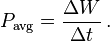
So average power is the average amount of work or energy converted per unit of time. And work is force multiplied by distance.
What does this have to do with protest, movements, revolutions? A lot, actually. As Van Jones pointed out, the Occupy Movement has generated a lot of energy. I witnessed this energy firsthand at Occupy Cal, where thousands of students gathered on Sproul, marched through the city of Berkeley, held general assemblies, and valiantly linked arms to protect their space. There was dancing, and drumming, and gospel, and speeches straight from the heart. Lots of bodies, lots of ideas, lots of anger, lots of passion ---- energy.
 |
| One of my personal photos of Occupy Cal, 11/15/11 |
There has actually been a fair amount of "work" done. As the New York Times has pointed out, the words "income inequality" have entered the collective consciousness of the United States. We are beginning to redefine public space. Occupy Cal and other student Occupy's have begun to expose flawed power relationships in the higher education system (yes, I'm looking at you, Chancellor Birgeneau.) But in order to keep generating power, rather than collecting a mass of energy, we've got to keep doing work.
The Keystone XL protest movement has done a really great job of exercising this principle. Bill McKibben and other Tar Sands Action activists have harnessed the energy of angry and passionate environmentalists, orchestrating the largest act of civil disobedience in years. They got arrested in August, they encircled the White House in November. They caused Obama to delay the approval of the pipeline, and over the past few days have been flooding the White House phone line with calls urging Obama to resist Congress' pressure to expedite the pipeline approval process. All this has happened in a matter of months - energy converted, over time.

I understand why people get frustrated with protesting. A lot of the time, it doesn't accomplish much, and more just serves as an outlet for anger and resentment - with excess yelling and banging of pots and pans. But when protesting is part of a larger movement, that is doing work, converting energy, and utilizing time effectively, it can be an absolutely essential tool for social change.
How's that for a physics lesson?
