I think biomimicry is the wrong word.
To model a company's structure after an ecosystem is not an act of mimicking "nature." It is being nature (which we are, of course).
It is a step toward acknowledging that we are in fact living animals, members of real ecosystems, and subject to ecological laws. Designing a new technology modeled after a plant is not "biomimicry," it is simply using the principles of the earth - the same earth that we live on! It is a step toward acknowledging that if we want to cultivate a sustainable lifestyle and habitat, we better start playing by the rules.
The first step toward recovery is acknowledging that we have a problem.
Thursday, February 9, 2012

Saturday, January 21, 2012


Sometimes a sprawling Coast live oak stops
me in my tracks. I wish I could forever reach in all directions without my arms
getting tired. I want to host moss and endless shades of lichen and feel the
warmth of symbiosis.

Wednesday, January 18, 2012
Moving into spring semester: lessons learned from a thoughtful winter break
The second day of classes at UC Berkeley has passed already, and the whirlwind of lectures, clubs, meetings at Cafe Milano, yoga classes, and nights spent emailing and google doc-ing have begun.
I am entering this semester after a winter break filled with self-reflection. I am entering this semester after organizing and collaborating at the CSSC leadership retreat. I feel that both of these pieces of my break will help define who I become by the time May rolls around.
First: self-reflection. Because I spent two full weeks at home, and one week traveling to New Mexico, my brain shifted gears with the change of pace. I was lucky enough to have been given David Abram's book, Becoming Animal. This book punched me in the gut... in an exhilarating way. I read about humankind's lost relationship with the natural world, how we don't communicate with rocks or ravens anymore, how we no longer experience spirituality in grasses and forests and thunderstorms. It hit me while reading that much of what he was saying resonated with me. Well, rather, it resonated with five-year-old me. Abram's words allowed a flood of memories and feelings to come rushing back to me - throwing washed up jellyfish on the beach back into the ocean, talking to birds, crying for animals, feeling a fierce passion for the animal world, for nature, for non-humans. I remembered the me that would rather talk to a sparrow than a person.
It hit me that in embracing "environmentalism" and the "sustainability movement" I had started to leave a part of me behind. It has felt so good to work with other people, to be part of something big, to feel included and powerful, that I have begun to forget what motivated me in the first place. I have taken on the rhetoric: that we're stopping climate change to save ourselves and our civilization, that we're going to fix communities and the economy by creating green jobs. Rhetoric that appeals to the masses. But I have started to use it so much, that I am losing sight of my own values, my own morals, my own sense of justice.
That's not to say that I cannot grow. Oh man, have I grown since I started doing "environmental work" - and I don't regret that growth in the least. I have learned about the interconnectedness of issues like food and energy, about different means of problem solving, about the complexity of social, economic, and environmental sustainability.
I think the challenge is to keep growing without losing sight of what brought me onto the path in the first place. I can acknowledge the beauty in the impressive array of perspectives in the movements I am a part of, and acknowledge my own unique place in that array as well. It's important to remember that we all come from somewhere - I come from a past with its own set of experiences and privileges, prejudices and truths.
The CSSC retreat showed me how beautiful it is when people have their heart and soul invested in an organization and a cause. Put 50 college students in a cabin in the woods, and you expect a whole lot of partying, sleeping in, and hanging out. But put 50 "sustainabilibuddies" from the CSSC in that situation, and you get the partying, but you also get meaningful conversations, consensus-based decision making, organizing, and campaign planning.
Investment. We are all willing to put in the leg-work because we all feel like this organization is ours, like the cause is ours, like our dreams are on the line and our visions are being played out right before our eyes. That attachment requires that our hearts are in in it - and that means staying true to ourselves, or rather, the children in us, who first felt like this was something worth fighting for.
And so, going into these next four months, in which I will be planning, and speaking, and organizing, and writing, and inspiring, I feel I am prepared to grow and learn while staying true to the nature-loving, animal-talking, mountain-girl who I know I will always be.
I am entering this semester after a winter break filled with self-reflection. I am entering this semester after organizing and collaborating at the CSSC leadership retreat. I feel that both of these pieces of my break will help define who I become by the time May rolls around.
 |
| Pacific Ocean, San Francisco |
It hit me that in embracing "environmentalism" and the "sustainability movement" I had started to leave a part of me behind. It has felt so good to work with other people, to be part of something big, to feel included and powerful, that I have begun to forget what motivated me in the first place. I have taken on the rhetoric: that we're stopping climate change to save ourselves and our civilization, that we're going to fix communities and the economy by creating green jobs. Rhetoric that appeals to the masses. But I have started to use it so much, that I am losing sight of my own values, my own morals, my own sense of justice.
That's not to say that I cannot grow. Oh man, have I grown since I started doing "environmental work" - and I don't regret that growth in the least. I have learned about the interconnectedness of issues like food and energy, about different means of problem solving, about the complexity of social, economic, and environmental sustainability.
I think the challenge is to keep growing without losing sight of what brought me onto the path in the first place. I can acknowledge the beauty in the impressive array of perspectives in the movements I am a part of, and acknowledge my own unique place in that array as well. It's important to remember that we all come from somewhere - I come from a past with its own set of experiences and privileges, prejudices and truths.
The CSSC retreat showed me how beautiful it is when people have their heart and soul invested in an organization and a cause. Put 50 college students in a cabin in the woods, and you expect a whole lot of partying, sleeping in, and hanging out. But put 50 "sustainabilibuddies" from the CSSC in that situation, and you get the partying, but you also get meaningful conversations, consensus-based decision making, organizing, and campaign planning.
 |
| CSSC Winter Leadership Retreat. Tia Tyler. |
Investment. We are all willing to put in the leg-work because we all feel like this organization is ours, like the cause is ours, like our dreams are on the line and our visions are being played out right before our eyes. That attachment requires that our hearts are in in it - and that means staying true to ourselves, or rather, the children in us, who first felt like this was something worth fighting for.
And so, going into these next four months, in which I will be planning, and speaking, and organizing, and writing, and inspiring, I feel I am prepared to grow and learn while staying true to the nature-loving, animal-talking, mountain-girl who I know I will always be.
 |
| Me in Prairie Creek Redwoods State Park, Humboldt |
Monday, December 19, 2011
The Role of Protest: How do we convert energy to power?
 |
| http://www.echoinggreen.org/fellows/van-jones |
Toward the end of the semester I sat in Wheeler Auditorium, watching and listening to Van Jones speaking to the Edible Education class via webcast from Burbank. This was the third time I had heard Van Jones speak, and like the other two times, he planted seeds of new ideas in my mind.
Jones spoke about Occupy, about protesting income inequality, about how our crises are interrelated and how getting out there and making our voices heard is essential in this pivotal historical moment. He spoke about the American dream, about reinventing society and forever moving in the direction of universal justice.
But one comment stuck out in particular. "Protesting creates a lot of energy. We've got to start translating that energy into power. Political power."
That got me thinking. What's the difference between power and energy, anyway? Didn't I learn this in high school physics?
(taken from Wikipedia)
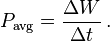
So average power is the average amount of work or energy converted per unit of time. And work is force multiplied by distance.
What does this have to do with protest, movements, revolutions? A lot, actually. As Van Jones pointed out, the Occupy Movement has generated a lot of energy. I witnessed this energy firsthand at Occupy Cal, where thousands of students gathered on Sproul, marched through the city of Berkeley, held general assemblies, and valiantly linked arms to protect their space. There was dancing, and drumming, and gospel, and speeches straight from the heart. Lots of bodies, lots of ideas, lots of anger, lots of passion ---- energy.
 |
| One of my personal photos of Occupy Cal, 11/15/11 |
There has actually been a fair amount of "work" done. As the New York Times has pointed out, the words "income inequality" have entered the collective consciousness of the United States. We are beginning to redefine public space. Occupy Cal and other student Occupy's have begun to expose flawed power relationships in the higher education system (yes, I'm looking at you, Chancellor Birgeneau.) But in order to keep generating power, rather than collecting a mass of energy, we've got to keep doing work.
The Keystone XL protest movement has done a really great job of exercising this principle. Bill McKibben and other Tar Sands Action activists have harnessed the energy of angry and passionate environmentalists, orchestrating the largest act of civil disobedience in years. They got arrested in August, they encircled the White House in November. They caused Obama to delay the approval of the pipeline, and over the past few days have been flooding the White House phone line with calls urging Obama to resist Congress' pressure to expedite the pipeline approval process. All this has happened in a matter of months - energy converted, over time.

I understand why people get frustrated with protesting. A lot of the time, it doesn't accomplish much, and more just serves as an outlet for anger and resentment - with excess yelling and banging of pots and pans. But when protesting is part of a larger movement, that is doing work, converting energy, and utilizing time effectively, it can be an absolutely essential tool for social change.
How's that for a physics lesson?
Saturday, November 26, 2011
Thankful
In honor of the holiday, I thought it would be a good idea to come up with a list of everything I'm thankful for as an environmentalist, sustainability activist, and nature lover. It's pretty easy to get negative when working on the never-ending issues that plague our planet and our culture, so I'm going to step back and look at all the wonderful things to appreciate.
I am thankful for...
the victory over the Keystone XL Pipeline in November 2011 (even if it is temporary)
the fact that renewable energy is growing every single year, and that the green economy is one of the only sectors of the economy experiencing remarkable growth
incredible people, and organizations, who are working around the clock doing incredible things. [350.org, Bill McKibben, the CSSC, Van Jones, Solar Mosaic, Focus the Nation, Alice Waters, the Sierra Club, the Energy Action Coalition, just to name a few]
the rising of a new, energetic, and powerful movement - Occupy, and the interconnectedness and solidarity that Occupy has created among disparate movements

climate scientists who are both finding extensive data and fighting to have their scientific opinion honored and respected (like James Hansen!)
the redwood grove in the Berkeley hills, and for that matter, redwoods everywhere. they take in carbon, they give us oxygen, and they give me beauty, wonder, and spiritual peace
the fact that fracking for natural gas in Delaware has been postponed
youth activists all over the country who are fighting for our generation and our future
The Green Initiative Fund, which gives out hundreds of thousands of dollars to student projects working to make campuses more sustainable
national parks, state parks, national forests, national monuments, national marine sanctuaries - basically places to play!

UC Berkeley and the incredible opportunities that it offers me in academics and leadership
the ocean (and its coral reefs, and kelp forests, and tidal zones, and deep open waters)
inspiring and passionate professors spreading knowledge, wisdom, and insight, and even showing up at Occupy protests because they truly care
the Endangered Species Act, the Clean Air Act, the Wilderness Act, the Clean Water Act... we live in a country that actually does give a damn, despite what we often think... and we're cleaner than most!
technology and the internet, without which, we could never have the international or even national interconnectedness that we do today in our movements and struggles
organic and sustainable farms, and organic and sustainable farmers
California's new cap and trade legislation
people under the radar everywhere who bike instead of drive, who grow their own food, who live zero-waste lifestyles, who compost, who dumpster dive, who practice permaculture, who put on sweaters instead of turning up the heat
delicious tap water in Berkeley, making bottled water useless (and hopefully gone soon, thanks to Take Back the Tap!)
the natural beauty everywhere I look that motivates me, refreshes me, inspires me every day

Whew, that's 20! Making that list made me feel pretty good, I have to say. What are you thankful for this November?
Friday, November 11, 2011
Keystone XL: A Symbol for the Modern Environmental Movement
Victories in the environmental and climate movement have been hard to come by lately. As the word "climate" has become increasingly more difficult to say in the political discussion, as the EPA struggles to hold onto its power, as fossil fuels continue to reign supreme, it's been hard to see how things are ever going to change at the rapid pace that the climate is changing.
But yesterday, President Obama announced he would delay his decision regarding the Keystone XL Pipeline until after the 2012 election. This decision came just four days after a massive protest in DC, where 12,000 people encircled the White House under the firm belief that if Obama approves the pipeline, there will be devastating consequences for the climate, indigenous peoples, water quality, boreal forests, the renewable energy economy, and more. These heroes encircled the White House more than four times.
 http://takethesquare.net/wp-content/uploads/2011/10/TarSandsAction-9-1-11-Group-2-banner-crop.jpg
Yesterday evening, I attended a timely panel at UC Berkeley hosted by the Berkeley Energy and Resources Collaborative (BERC) and the Environmental Law Society, regarding the pipeline. The panel featured Jamie Henn, of 350.org; Dr. Paul Henshaw, UC Berkeley Professor in Earth and Planetary Sciences; Cassie Doyle, Consul-General of Canada in San Francisco and the Silicon Valley, and Sarah Burt, of Earthjustice.
The hour and a half of discussion brought some really important and pertinent questions to the table. Is the pipeline a better alterative to bringing politically and physically messy oil from overseas via tankers? Is modern pipeline technology safe enough to make this a good idea? What will it do for gas prices? Jobs? Will building this pipeline further inhibit clean energy companies like wind farms and solar firms to break into the market? What would the pipeline say about our national attitude toward climate change? I urge you to explore all of these questions yourself by researching the facts and evaluating your priorities.
 While many interesting perspectives were brought up over the course of the discussion, I absolutely stand by original stance - that this pipeline cannot be justified, and should not be built under any circumstances. The tar sands in Alberta make up the third largest oil reserve in the world. As Jamie Henn reminded us, James Hansen (top climate scientist from NASA) has stated that if we were to utilize the oil from that tar sands reserve, it would be essentially game over for the climate. While Dr. Henshaw reminded us that there are new technologies like horizontal and dual-well systems, nothing can overcome the implications for the global climate. Cassie Doyle reminded us that Canada's energy profile is cleaner and more efficient than ours in the United States - and that's precisely the problem. The US has to end its addiction to oil.

The costs of this pipeline to the environment, climate, and indigenous livelihoods are just too great. And that's why I am so ecstatic about Obama's announcement yesterday - even though it's not a "no," it's a "I acknowledge the opposition and I think you're right - this needs more review." It gives us even more time to prove that the people of the United States do not want this.
So why did this fight win? How did it build so much momentum? Why did this fight come to the forefront of the movement?
Over the past five years or so, the "environmental" movement has fractured and changed shape. Due to the evolution of climate politics, there are often splits between environmental conservationists and climate activists ("climate hawks.") Wind turbines vs. migratory bird and bat well-being. Hydropower vs. healthy rivers. Nuclear energy and the many facets of that debate.
But this issue, the Keystone XL issue, unites these fronts. Whether you're an environmentalist or a climate hawk, a John Muir preservationist or a Gifford Pinchot utilitarian, you have a place in this movement. The Keystone XL brought together people who care about renewables, people who care about forests, people who care about human rights, people who care about democracy and hate corporations, people who care about the climate, and people who just don't like pipelines. That togetherness was desperately needed in the environmental movement, and I'm so happy to see that it has arrived in full force - 12,000+ strong.
But yesterday, President Obama announced he would delay his decision regarding the Keystone XL Pipeline until after the 2012 election. This decision came just four days after a massive protest in DC, where 12,000 people encircled the White House under the firm belief that if Obama approves the pipeline, there will be devastating consequences for the climate, indigenous peoples, water quality, boreal forests, the renewable energy economy, and more. These heroes encircled the White House more than four times.

Yesterday evening, I attended a timely panel at UC Berkeley hosted by the Berkeley Energy and Resources Collaborative (BERC) and the Environmental Law Society, regarding the pipeline. The panel featured Jamie Henn, of 350.org; Dr. Paul Henshaw, UC Berkeley Professor in Earth and Planetary Sciences; Cassie Doyle, Consul-General of Canada in San Francisco and the Silicon Valley, and Sarah Burt, of Earthjustice.
The hour and a half of discussion brought some really important and pertinent questions to the table. Is the pipeline a better alterative to bringing politically and physically messy oil from overseas via tankers? Is modern pipeline technology safe enough to make this a good idea? What will it do for gas prices? Jobs? Will building this pipeline further inhibit clean energy companies like wind farms and solar firms to break into the market? What would the pipeline say about our national attitude toward climate change? I urge you to explore all of these questions yourself by researching the facts and evaluating your priorities.
 While many interesting perspectives were brought up over the course of the discussion, I absolutely stand by original stance - that this pipeline cannot be justified, and should not be built under any circumstances. The tar sands in Alberta make up the third largest oil reserve in the world. As Jamie Henn reminded us, James Hansen (top climate scientist from NASA) has stated that if we were to utilize the oil from that tar sands reserve, it would be essentially game over for the climate. While Dr. Henshaw reminded us that there are new technologies like horizontal and dual-well systems, nothing can overcome the implications for the global climate. Cassie Doyle reminded us that Canada's energy profile is cleaner and more efficient than ours in the United States - and that's precisely the problem. The US has to end its addiction to oil.

The costs of this pipeline to the environment, climate, and indigenous livelihoods are just too great. And that's why I am so ecstatic about Obama's announcement yesterday - even though it's not a "no," it's a "I acknowledge the opposition and I think you're right - this needs more review." It gives us even more time to prove that the people of the United States do not want this.
So why did this fight win? How did it build so much momentum? Why did this fight come to the forefront of the movement?
Over the past five years or so, the "environmental" movement has fractured and changed shape. Due to the evolution of climate politics, there are often splits between environmental conservationists and climate activists ("climate hawks.") Wind turbines vs. migratory bird and bat well-being. Hydropower vs. healthy rivers. Nuclear energy and the many facets of that debate.
But this issue, the Keystone XL issue, unites these fronts. Whether you're an environmentalist or a climate hawk, a John Muir preservationist or a Gifford Pinchot utilitarian, you have a place in this movement. The Keystone XL brought together people who care about renewables, people who care about forests, people who care about human rights, people who care about democracy and hate corporations, people who care about the climate, and people who just don't like pipelines. That togetherness was desperately needed in the environmental movement, and I'm so happy to see that it has arrived in full force - 12,000+ strong.
Wednesday, November 9, 2011
We Are Nature: CSSC Fall 2011 Convergence
Social biomimicry.
Radicles.
Permaculture.
Ubuntu.
These are words that stuck with me after the California Student Sustainability Coalition's Fall 2011 Convergence at CSU Chico this past weekend.

Morgoth Gamboa got my adrenaline pumping as he kicked off the weekend with energy, passion, and a way of thinking that was completely new to me. He walked us through the concept of "social biomimicry"- how we can model our activism, communities, and social systems using biology and nature. Just as a baby plant takes in resources and energy, stretches its roots downward and outward in order to grow tall, inhales the good and exhales the bad - so can we as sustainability activists.
The California Student Sustainability Coalition is roots. It's interconnected fungi beneath the soil, creating symbiotic relationships between all of the interwoven life in its realm (that's us!). It's sunlight in the form of new perspectives, voices, insight, passion. It's the ecosystem that contains all of us: "radicles," just waiting to break through the surface to grow, grow, grow - and give back.
By this, I mean that the CSSC is a network of sustainability-minded students from across the state of California, providing a space to communicate, collaborate, and help our campus projects and campaigns grow and develop.
We are a permaculture. Or, at least, we strive to be. If we are conscious of ecological principles, and act out of this consciousness, we can transform our planet and our social system so that they last. When we get rid of the concept of "waste," when we live within earth's limits, when we appreciate one another and grow from our interactions, when we comprehend the intrinsic connections between life, matter, and mind- then, we can begin to approach something like "sustainability." Then, we move toward a permanent culture that sustains itself with intrinsic motivation, mutualistic relationships, and the plain-old happiness that comes from being together- happiness I know I felt this past weekend at the convergence.
In my Environmental Studies class last year, we spent a little time studying wilderness philosophy. Wallace Stegner's Wilderness Letter stuck in my mind ever since... particularly one quote:
"We simply need that wild country available to us, even if we never do more than drive to its edge and look in. For it can be a means of reassuring ourselves of our sanity as creatures, a part of the geography of hope." (read the full letter here)
That quote always spoke to me, but it has taken on new meaning now. "Wild country," or wilderness that exists on its own terms, allowed to grow and thrive as biology mandates, is our classroom. It's "a means of reassuring ourselves of our sanity as creatures" because the relationships, complex systems, and intrinsic beauty within that culture of wilderness are what we need to study in order to model our communities and restore and sustain "sanity." Then, we can begin to create a "geography of hope" - rooted in a sense of place, we can grow and transform into the kind of culture and the kind of planet we've always dreamt could exist. When I look at where all the convergence attendees came from on the map of California, I see a geography of hope.
I can close my eyes and imagine the CSSC Convergence, with all its elements, from workshops to late night jam sessions to a field full of wet tents, as a garden. Each part plays a role, everyone occupies a niche, every nutrient is used and recycled, and the result is something beautiful. And for that matter, sustainable - because we'll all be back in the spring, and the fall after that, and the spring after that!
As in a lichen, where the algae exists because the fungus exists, as in a forest, where one live oak exists because another one does, I exist because you, you beautiful sustainabilibuddy, exist: Ubuntu.
Subscribe to:
Posts (Atom)